
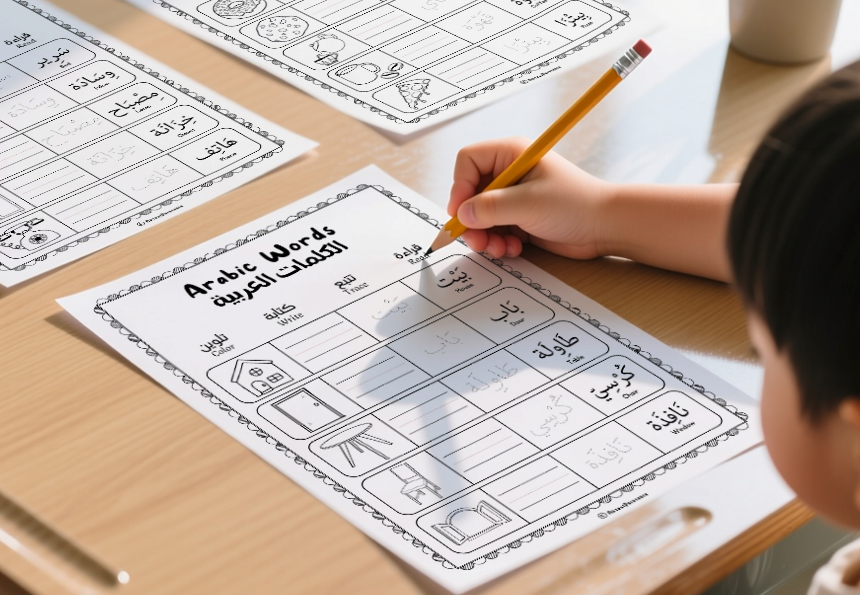
Introducing a second language to young children doesn’t have to feel like a heavy school subject. For parents and educators balancing modern schedules, the secret to natural language acquisition lies in the first 30 minutes of the day. Integrating bilingual Arabic English printables into your morning routine can transform chaotic mornings into peaceful, high-impact learning opportunities.
In this guide, we will explore why morning language binders work, how to set them up, and why combining visual arts with writing creates a bulletproof foundation for early bilingual literacy.
The Power of the “Morning Basket” in Bilingual Homeschooling
A ‘Morning Basket’ or ‘Morning Binder’ is a dedicated selection of gentle, self-paced activities that children complete as they wake up or during breakfast. Instead of rigid testing, these activities focus on discovery, fine motor skills, and creative expression. When you utilize dual-language resources, children begin to bridge the gap between English and Arabic seamlessly. Studies on Bilingual Education show that seeing words side-by-side with cute, identifiable objects builds instant contextual memory without the need for stressful rote memorization.
3 Science-Backed Reasons to Use Printables for Early Language Learning
1. Tactile Learning and Fine Motor Control
While screen-based apps are convenient, they do not build physical neural pathways the way a pencil or a paintbrush does. According to research on Tactile Learning, when young school students write out Arabic letters and paint the matching objects, they activate multiple sensory zones in the brain simultaneously. This dramatic cognitive engagement makes letter retention much stronger.
💡 Exclusive Resource: Explore our signature [Arabic Alphabet Mastery Workbook: The Ultimate 84-Page Phonics System] to kickstart your morning binder today!
2. Clear and Structured Progression Eliminates Overwhelm
Children thrive on predictability. Highly engaging, clear, and easy worksheets allow kids to work independently. This builds incredible self-confidence. When an Arabic worksheet is intuitively structured, a child can immediately understand the task—whether it is tracing, matching, or coloring—allowing parents to focus on making breakfast while real learning takes place.
3. Building an Emotional Connection Through Art
Why do children love painting cute objects next to new words? Because art transforms an abstract language into a tangible friend. Coloring a ‘Tuffah’ (apple) or a ‘Kitab’ (book) creates a positive emotional association with the Arabic script, turning what could be a chore into a favorite morning hobby.
🎁 Bilingual Words: Grab the ultimate [Arabic Words with English | Printable Tracing, Writing & Coloring Worksheets] designed for kids aged 4-8.
How to Structure Your Perfect Bilingual Morning Routine
To get the most out of your printable educational resources, follow this simple 3-step blueprint:
- The Warm-Up (Trace & Write): Start with one simple letter or word tracking page to get the hand muscles moving.
- The Creative Break (Paint & Color): Let your child color or watercolor the objects associated with that word. This reinforces the visual memory.
- The Verbal Connection: Have them read the bilingual words out loud to you before transitioning to their main school day.
Final Thoughts for Parents and Teachers
Consistency beats intensity every single time. Spending just 10 to 15 minutes every morning with clear, beautifully designed bilingual worksheets will yield far better results than a stressful 2-hour weekend lesson. By creating a joyful space filled with lovely pages to write and paint, you are gifting your children a lifelong love for both the Arabic and English languages.
Essential Tools to Pair with Your Morning Printables
To maximize the impact of your bilingual morning basket, you don’t need an expensive setup. Pairing your clear and easy worksheets with the right tactile tools can double your child’s engagement. Here are a few recommended items to keep in your morning basket:
- Washable Watercolors or Dot Markers: Perfect for coloring the cute objects next to each Arabic word without making a mess before school.
- Dry-Erase Pouches: Slide your printable sheets into these pouches so your children can practice tracing Arabic letters with a marker, wipe it clean, and reuse the same page tomorrow.
- Safety Scissors and Glue Sticks: Great for interactive matching worksheets that require cutting out letters and pasting them in the correct spots.
Great content! Keep up the good work!